


VIC MARKET UPDATE
Electricity Prices
In October 2025, we observed that Victoria’s electricity market remained moderately volatile, influenced by springtime weather patterns, variable renewable output, and ongoing maintenance at key thermal plants. Wholesale prices were generally lower than September peaks, benefiting from strong solar generation during the day, but sharp price spikes continued in the evenings as rooftop solar declined and wind output fluctuated. Gas and coal-fired stations continued to provide reliable base-load supply, while battery storage helped moderate short-term price movements.
Generation Mix
Victoria’s electricity generation was supplied by a mix of coal, gas, wind, and solar. Renewable sources accounted for approximately 35–40% of total generation, with rooftop solar delivering robust daytime output, while wind generation remained variable throughout the month.
Key factors influencing supply and prices in October included:
-
Yallourn Power Station continued scheduled maintenance on select units, temporarily reducing coal-fired generation capacity.
-
Network constraints in the Latrobe Valley and Melbourne regions increased pressure during periods of high demand.
-
Variable wind generation contributed to short-term evening price spikes.
-
Rooftop solar maintained downward pressure on prices during midday, offsetting some cost pressures.
-
Gas-fired generation met demand when renewable output was low, adding to overall fuel costs.
-
Battery storage, including the Victorian Big Battery, helped stabilise the grid by storing surplus renewable energy and discharging during peak demand.
Futures Pricing
We observed that forward electricity prices for Victoria in October 2025 remained moderately volatile:
-
Base month futures moved by around ±8–11%, reflecting slightly calmer market conditions compared with September.
-
Evening peak prices spiked due to low wind output, declining solar generation, and high grid demand during late afternoon and evening hours.
What This Means for Your Business
We observe that Victoria’s electricity costs remain closely linked to renewable output and periods of high demand. Midday rooftop solar helps suppress daytime prices, but businesses are exposed to significant price spikes in the evening when solar generation falls and wind output is variable.
Maintenance outages at coal and gas-fired plants, along with local network constraints, can further drive short-term price volatility. For large energy users, this means that relying solely on spot market pricing can lead to unexpected cost increases.
If your business does not yet have a strategy in place, we can help. Contact us for a free bill check or to discuss a tailored energy procurement plan.


vic ELECTRICITY FUTURE PRICING CHARt
Severe Weather and Market Notices
Victoria’s energy network faced a challenging end to October, with severe storms on October 22 and 23, followed just days later by a tornado on October 26 that swept through Melbourne’s west. The back-to-back weather events caused widespread power outages across the Powercor, AusNet Services, Jemena, and United Energy networks, affecting thousands of customers across regional and metropolitan areas. Large energy users in manufacturing, agriculture, and logistics were particularly impacted, experiencing production downtime, operational damage, and financial losses. The events have underscored the vulnerability of energy infrastructure to extreme weather and the importance of investing in long-term network resilience.
Powercor network
Powercor's network was among the hardest hit, with areas in the Goulburn Valley and other regional parts of the state suffering significant outages.
-
Goulburn Valley: On Wednesday, October 22, over 1,100 properties in the Echuca-Kyabram region lost power, including 1,029 customers in Echuca, 140 in Kyabram, and 18 in Girgarre.
-
Other impacted areas: The Powercor outage list indicated numerous other locations affected by wind-related incidents and other faults during the storm.
The tornado on October 26 primarily affected the Powercor electricity distribution network, causing extensive damage across Werribee, Wyndham Vale, and Hoppers Crossing. At the storm’s peak, more than 28,000 customers lost power as debris, including trees, fences, and solar panels, struck the network. Powercor crews worked late into the night to restore power to most customers, with repairs continuing into the following day.
AusNet Services network
AusNet Services also experienced widespread unplanned outages across its network, which covers much of regional Victoria and Melbourne's outer suburbs.
-
Preparation for storm: Ahead of the storms, AusNet had crews on standby due to the predicted damaging winds and high rainfall.
-
Specific incidents: The outage tracker detailed thousands of customers impacted by unplanned outages, one of which was over 5,500 customers in the Donnybrook and Kalkallo area lost power on October 22.
Jemena network
Jemena, which supplies electricity to parts of Melbourne's north and northwest, also saw network disruption during the severe weather event.
United Energy network
United Energy, covering Melbourne's southeast and the Mornington Peninsula, also had outages, though they were not as severe during the storm as in other areas.
what this means for businesses
Mitigating future risks
The storms and other recent events have reinforced the need for large energy users and distributors to increase energy resilience.
-
Investing in resilience: Infrastructure Victoria and the Australian Energy Market Commission have advocated for investing in measures to protect infrastructure, such as strengthening poles and wires, to reduce the risk of outages from extreme weather.
-
Backup power solutions: Large-scale battery storage, backup generators, and microgrids are being implemented by large businesses and communities to provide reliable power during grid disruptions.
-
Enhanced planning: Utilities are required to develop more robust emergency plans and network resilience strategies to better manage and recover from widespread, prolonged outages.


Energy Safe Victoria’s 2025–28 Strategy Released
On 15 October, Energy Safe Victoria (ESV) released its Strategy 2025–28, outlining how it will manage safety challenges linked to Victoria’s accelerating energy transition. The plan focuses on maintaining system reliability and public safety as the state integrates more renewable energy, battery storage, and distributed generation. It also addresses climate-related risks, such as extreme weather events, and highlights ESV’s intent to strengthen regulatory oversight across transmission, distribution, and on-site generation assets.
what this means for businesses
While the strategy’s primary focus is on safety and regulatory oversight rather than pricing, it may have indirect effects on energy costs over time. Increased compliance requirements and stricter safety standards for generation, transmission, and storage infrastructure could raise operational and project development costs. These costs may eventually be passed through to end users via network charges or project investment recovery mechanisms.
However, by improving grid safety, reliability, and resilience, the strategy also helps reduce the likelihood of costly outages and system disruptions, which supports long-term price stability. For large energy users, this means that while short-term regulatory costs could marginally increase, the overall outcome should contribute to a safer and more predictable energy market in Victoria.
Victorian Energy Upgrades (VEU)
On October 3, 2025, the Victorian government expanded the Victorian Energy Upgrades (VEU) program to offer substantial upfront discounts for commercial, industrial, and community organisations installing solar systems. This is a "game-changing" incentive aimed at a market segment that has historically lagged behind residential solar uptake.
Key details of the VEU commercial solar discounts:
System size
-
The discounts apply to solar photovoltaic (PV) systems with a capacity between 30 and 200 kilowatts (kW).
-
Systems larger than 200 kW are still supported but must continue through the existing Project-Based Activities (PBA) pathway.
Financial benefits
-
Upfront VEU discount: The rebate provides significant upfront savings for businesses. For example:
-
100 kW system: Up to $25,000 off the upfront cost.
-
200 kW system: Up to $34,300 off the upfront cost.
-
-
Combined savings: These VEU discounts can be combined with existing federal rebates, such as Small-scale Technology Certificates (STCs) for systems under 100 kW and Large-scale Generation Certificates (LGCs) for systems over 100 kW.
-
Total savings: Combining state and federal incentives can reduce the installation cost by up to 35%.
Eligible organisations
The program is available to a wide range of non-residential sites in Victoria, including:
-
Commercial and industrial businesses
-
Community organisations
-
Hospitals
-
Local government buildings
-
Aquatic centers
-
Aged care facilities
-
Factories
-
Schools
If you would like to understand how your business can take advantage of the expanded VEU commercial solar discounts, contact us today for a free consultation or bill check.

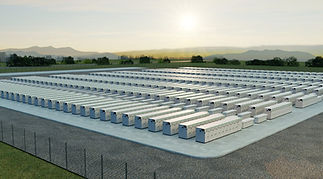
ARENA Funds $25 Million ‘World-First’ Battery Storage Project in Victoria
The Australian Renewable Energy Agency (ARENA) announced $25 million in funding for Melbourne-based company Relectrify on October 22, 2025, to support the rollout of its innovative AC1 battery energy storage system (BESS). This technology is considered a "world-first" for its design, which eliminates the need for a separate inverter, and it's projected to deliver significant performance benefits for commercial and industrial users.
Operational and financial impacts
-
Reduced costs: Large energy users can expect to lower their overall energy costs by utilizing the AC1 system. By storing cheaper energy during off-peak hours and using it during peak demand, businesses can minimize exposure to high electricity tariffs and demand charges.
-
Enhanced performance and longevity: Relectrify's patented CellSwitch technology provides individual control over each battery cell, which prevents a single faulty cell from degrading the entire system. This feature is projected to deliver up to 20% more usable energy over the system's lifetime, boosting the return on investment for large-scale deployments.
-
Greater reliability: For energy-critical operations like data centers, manufacturing plants, and hospitals, the AC1 offers greater resilience and reliability. The system's ability to bypass faulty cells ensures continued operation, reducing the risk of costly downtime and production halts.
-
Simpler installation: Eliminating the need for a separate inverter makes the system more compact and simplifies the installation process. This can lower initial capital expenditure and make battery storage a more accessible option for large-scale applications.
Strategic benefits for large energy users
-
Energy independence: Large users can gain more control over their power supply and reduce reliance on the grid, especially in areas with unstable or aging infrastructure. This was underscored by the widespread outages in Victoria during the October 2025 storms.
-
Renewable integration: The AC1 makes it more efficient for large users to integrate on-site solar or other renewable energy sources. Businesses can maximise self-consumption and reduce their carbon footprint by storing excess renewable generation.
-
Reduced network pressure: Widespread use of systems like the AC1 by large energy users will help decrease the overall demand on the electricity network during peak periods. The entire grid benefits by lowering the need for expensive infrastructure upgrades and reducing reliance on less efficient peaking power plants.
-
Creation of reference sites: The $25 million in ARENA funding will help deploy the AC1 in real-world scenarios across the C&I sector. This will create valuable case studies and operating data that other large energy users can use to assess the technology and inform their own investment decisions.