


nsw MARKET UPDATE
The NSW electricity market is entering spring with wholesale prices considerably lower than the same time last year, while batteries and new renewable generation continue to change how electricity is supplied throughout the day.
In September, the pricing we have been obtaining for NSW businesses continues to show more favourable wholesale and forward market conditions than this time last year. The latest completed monthly data also supports this trend, with the August 2026 NSW average wholesale spot price at $75.71/MWh, compared with $101.25/MWh in August 2025, a reduction of around 25%.
What we are seeing in the market:
-
Lower wholesale prices: Pricing available to businesses remains well below the levels we were seeing this time last year.
-
More battery activity: Battery discharge has increased substantially, helping supply electricity when solar generation falls away.
-
Less reliance on gas: NSW gas generation fell by 76.8% year-on-year in August.
-
Greater price variation throughout the day: Solar continues to suppress prices around the middle of the day, while evening and overnight periods can still experience higher prices when demand remains strong.
The AER's latest wholesale market review also highlights this increasing time-dependency. From our perspective, September is showing that the market is becoming less about the average wholesale price and more about when electricity is being used, how a business is positioned in the market and the pricing available at the time of procurement.
Other key changes to watch this month:
-
New network tariffs are now flowing through 2026–27 bills
-
Forward prices remain relatively stable as businesses look towards 2027 contracts
-
Increasing battery capacity is continuing to change how peak demand is supplied
-
New renewable and transmission projects are reshaping the longer-term supply outlook
Futures Market Movement
Forward prices have been relatively stable during 2026 rather than continuing to fall sharply.
In the pricing we have been obtaining for NSW businesses, we are seeing forward market pricing remain relatively steady, with prices continuing to sit at lower levels than we have seen previously.
During August to September:
-
NSW calendar-year 2027 futures increased by around 2%
-
2028 futures were broadly unchanged
-
2029 futures eased slightly
This suggests the forward market is currently consolidating around the lower pricing levels seen during the year.
Network Tariff Changes
The 2026–27 network tariffs have now been in effect for almost three months, with the changes beginning to flow through business electricity bills.
The AER says NSW network charges are generally increasing this year, influenced by:
-
Higher transmission costs
-
Inflation
-
Revenue adjustments
-
Costs associated with the NSW Electricity Infrastructure Roadmap
There are also changes at individual distributor level. For example, Ausgrid's small-business demand tariff threshold increased from 80 MWh to 100 MWh per year from 1 July 2026, completing a three-year transition.
In the bills we are reviewing, network charges continue to be an important part of the overall cost of electricity.
This means businesses can still see changes to their electricity costs even when wholesale prices are falling, particularly where tariff structures or network charges have changed.
Supply Outlook – Generation & Infrastructure
NSW is continuing to build the infrastructure needed to support a more renewable electricity system and replace retiring generation.
Several developments are shaping the state's supply outlook:
-
Renewable generation: Transgrid's 2026 Transmission Annual Planning Report, released on 10 September, expects NSW's electricity supply to move from around 40% renewable today to 90% by 2035.
-
Growing electricity demand: Data centres, electrification, rooftop solar and household batteries are expected to be major drivers of changing electricity demand.
-
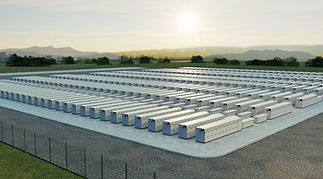
More battery capacity: On 18 September, the NSW Government confirmed that all four projects supported through the second round of the Electricity Infrastructure Roadmap were operational, including three large batteries and a virtual power plant.
-
Peak demand support: Together, these projects can provide or reduce around 400,000 households' worth of peak demand, adding more flexibility to the system ahead of summer.
-
Stronger transmission: Projects such as Sydney Ring South are being developed to improve electricity flows into Sydney and increase access to lower-cost renewable generation from regional NSW and interstate markets.
The direction of travel is clear: NSW is moving towards a system with more renewable generation, more storage and greater electricity demand. For businesses, these changes will continue to influence how wholesale prices behave across different times of the day.
What it means for your business
September provides a useful opportunity for NSW businesses to review their energy position before the final quarter of the year.
From the pricing we are currently obtaining, market conditions remain considerably more favourable than a year ago, while batteries and new renewable generation are reducing reliance on gas and changing the way peak demand is supplied. At the same time, network costs have increased in many areas and individual tariff structures can have a significant effect on the final electricity bill.
Businesses approaching contract expiry should therefore consider both the current wholesale market and the costs sitting behind the retail rate. Reviewing recent bills, tariff structures, usage patterns and forward pricing now can provide greater visibility before making the next procurement decision.
If your energy contract is approaching renewal, or you would like to better understand your current position, contact TTEG for a complimentary bill check.


nsw ELECTRICITY FUTURE PRICING CHARt

On 18 September 2026, the NSW Government confirmed that all four projects supported through the second round of the Electricity Infrastructure Roadmap are now operational. The projects include three large-scale batteries and a statewide virtual power plant, representing more than $1.8 billion of investment.
Together, the projects can provide energy or reduce demand during periods of high system demand, with enough capacity to support around 400,000 households at peak demand.
For the electricity market, the significance goes beyond simply adding more generation. Batteries can store electricity when supply is plentiful and release it when demand increases, particularly during the evening when solar generation falls away.
The new projects include:
-
Liddell Battery: 500 MW / 1,000 MWh
-
Orana Battery: 415 MW / 1,660 MWh
-
Smithfield Battery: 65 MW / 130 MWh
-
Virtual Power Plant: 95 MW of demand response capacity
The additional firming capacity should provide more flexibility heading into summer, when NSW electricity demand can rise sharply during periods of extreme heat.
What it means for businesses
More battery capacity could help reduce pressure on the grid during peak periods and change the way wholesale prices behave across the day. For businesses with significant evening or peak-period electricity use, this makes it increasingly important to understand when energy is being consumed and how their retail contract prices different periods of use.

NSW is also preparing for a significant increase in electricity demand. Transgrid's 2026 Transmission Annual Planning Report, released on 10 September, highlights data centres, electrification, rooftop solar and household batteries as major factors changing the state's electricity requirements. Transgrid expects NSW's electricity supply to move from around 40% renewable today to 90% by 2035.
This growing demand is putting greater focus on the transmission network. Sydney Ring South, currently in the planning process, is intended to improve electricity flows into Western Sydney, Sydney, Newcastle and Wollongong, an area that accounts for around 75% of NSW electricity consumption. The project is designed to improve access to lower-cost renewable generation as coal-fired generation retires and electricity demand grows.
What this means for businesses:
As electricity demand grows and the network changes, the cost of getting electricity to major business centres will remain an important part of the overall energy bill. Transmission investment, network charges and access to new renewable supply can all influence future electricity costs, making it important for larger energy users to look beyond the wholesale rate when reviewing their next contract.
What it means for businesses
For businesses, the NSW market is not simply adding more renewable generation. The way electricity is stored, generated and moved around the state is changing too, which will continue to influence energy costs and procurement decisions.
The rapid growth of data centres in NSW is creating a new challenge for the electricity network. As large technology and AI facilities require significant amounts of electricity, additional generation, transmission and network infrastructure will be needed to support them.
In August, the NSW Government opened consultation on proposed reforms to the way electricity network connection and infrastructure costs are allocated to data centres. The consultation closed on 14 September 2026, with the Government proposing that data centre operators should fund the additional energy infrastructure required to support their developments, rather than passing those costs on to households and other businesses.
The scale of potential demand is significant. As of July 2026, data centres were seeking network connections totalling up to 28 GW, with around 13 GW of projects already in advanced discussions. The NSW Government notes that 13 GW is more than the state's average daily electricity demand.
What it means for businesses
For other electricity users, the issue is ultimately about who pays for the network expansion required by this new demand. If additional infrastructure costs were spread across the broader customer base, they could place further pressure on electricity network costs. The proposed reforms are intended to limit this by requiring data centre operators to fund the additional infrastructure they require.
The growth of data centres could also create opportunities for new renewable generation and battery storage as the electricity market responds to higher demand. For businesses, however, the key issue will be how these changes affect future network costs, electricity supply and pricing as NSW's demand profile continues to change.
The NSW Government has introduced legislation to enable the proposed reforms, with further regulations to be developed following the consultation process.


Project EnergyConnect, the major transmission link connecting NSW with South Australia and Victoria, has experienced a substantial increase in construction costs. The project was initially expected to cost around $2.3 billion, but the final cost has risen to approximately $3.6 billion, an increase of about 56%. The NSW component has accounted for most of the increase, with Transgrid's share rising significantly as the project encountered delays and construction problems.
The NSW section was affected by a series of issues, including the collapse of a major delivery contract, flooding, COVID-related disruption and significant increases in labour and material costs. Transgrid has argued that these were external factors that could not reasonably have been anticipated when the project was originally budgeted. The South Australian portion, by comparison, was completed by ElectraNet in December 2023, on time and on budget.
Transgrid applied to the Australian Energy Regulator (AER) in February 2026 to recover $1.2 billion of the additional capital expenditure from customers. On 1 September 2026, however, the AER released a preliminary position that it was not satisfied Transgrid had met the requirements to reopen its existing 2023–28 revenue determination.
This does not mean the additional costs can never be recovered. The AER has indicated that prudent and efficient expenditure can still be considered through the normal 2028–33 regulatory determination process. Transgrid also has an opportunity to respond to the AER's preliminary position before a final decision is made.
What it means for businesses
The immediate impact is not a new charge appearing on September electricity bills. The bigger issue is what happens to these costs over future regulatory periods.
If some of the additional expenditure is ultimately approved for recovery, it could become part of Transgrid's regulated asset base and contribute to future transmission charges paid by electricity customers.