VIC MARKET UPDATE
Electricity Prices
In September 2025, we observed continued volatility in Victoria’s electricity market, driven by both supply and demand factors. Wholesale prices remained elevated, influenced by network constraints, periods of lower wind and solar generation, and maintenance at key thermal plants. While gas and coal-fired stations provided reliable base-load supply, fluctuations in renewable output contributed to short-term price spikes across the month.
Generation Mix
Victoria’s electricity generation came from coal, gas, wind, and solar. Renewables contributed around 30–35% of supply, with rooftop solar delivering strong daytime output and wind generation remaining variable throughout the month.
Several key factors influenced supply and prices in September:
-
Yallourn Power Station underwent scheduled maintenance, reducing coal-fired generation.
-
Local network constraints added pressure on supply during high-demand periods.
-
Wind generation fluctuated, with lower output contributing to evening price spikes.
-
Rooftop solar helped suppress prices during the day, but sharp demand in the evening once solar output declined pushed spot prices higher.
-
Gas-fired generation stepped in during periods of low renewable output, adding cost pressures due to higher fuel costs.
-
Battery storage assets, including the Victorian Big Battery, supported grid stability by storing excess renewable energy during the day and releasing it during evening peaks.
Futures Pricing
We observed that forward electricity prices for Victoria in September 2025 showed moderate to high volatility:
-
Base month futures fluctuated by roughly ±10–12%, tracking the average price trend.
-
Evening peak prices spiked due to low wind output, reduced solar contribution in the late afternoon, and high grid demand during peak periods.
What This Means for Your Business
Energy costs in Victoria remain sensitive to changes in renewable output and periods of high demand. Midday rooftop solar provides some relief, but businesses face sharp price rises during evening peaks when wind and solar generation drop. Maintenance outages at coal or gas plants and local network congestion add further uncertainty, potentially impacting operational budgets, cash flow, and long-term energy planning.
If your business does not yet have a strategy in place, we can help. Contact us for a free bill check or to discuss a tailored energy procurement plan.


vic ELECTRICITY FUTURE PRICING CHARt
Offshore Wind Auction Delay
On 16 September 2025, the Victorian Government postponed Australia’s first offshore wind auction, originally scheduled for this month. The auction was designed to award contracts-for-difference (CfDs) to developers, giving them price certainty to finance large offshore wind projects in Gippsland.
The delay was driven by unresolved issues around port and transmission infrastructure, federal funding agreements, feasibility licence approvals, and weaker global investment conditions. Some developers, including Origin Energy, had already stepped back, citing the ambitious timeline.
Industry groups say the pause is disappointing but preferable to a poorly designed auction. Communities fear it could slow job creation and decarbonisation, while the government has promised a new timeline by the end of 2025.
This delay pushes back Victoria’s offshore wind rollout, a cornerstone of its goal to deliver 9 GW of offshore wind by 2040.
what are the impacts
-
Delayed renewable capacity: Offshore wind projects will take longer to come online, slowing the addition of large-scale clean energy.
-
Continued reliance on gas and coal: Higher-cost fossil generation will keep supporting supply during peak periods.
-
Price volatility: Without offshore wind’s steady output, businesses will face more short-term price spikes, especially in the evenings.
-
Budgeting uncertainty: Energy costs will remain harder to predict, adding risk to forward contracts and long-term planning.


VicGrid Reforms & New Transmission Powers
On 10 September 2025, the Victorian Legislative Assembly agreed to amendments made by the Legislative Council to the National Electricity (Victoria) Amendment (VicGrid Stage 2 Reform) Bill 2025, finalising the Bill before Royal Assent. The amendments addressed concerns around land access, procedural safeguards, and community benefits while maintaining VicGrid’s expanded transmission powers.
Key changes included:
-
Biodiversity funding: The REZ Community Fund must now explicitly support biodiversity outcomes in addition to community benefits.
-
Clarified authority: Powers for land access and enforcement are limited to public sector employees, ensuring accountability.
-
Procedural safeguards: Courts must consider compliance with codes of practice before approving entry orders, and some time limits for actions were shortened.
-
Restricted entry applications: The CEO of VicGrid was removed as an applicant for certain land entry orders, narrowing the scope of who can initiate action.
What are the impacts
-
Stronger transmission planning: VicGrid reforms improve coordination and connection of renewable energy projects.
-
Long-term price benefits: More renewable supply should help moderate wholesale electricity prices over time.
-
Short-term volatility: Added safeguards and land access rules may slightly delay projects, keeping peak-period prices more unpredictable.
-
Business takeaway: Energy-intensive businesses may still face short-term price spikes but can expect more stable and lower-cost renewable supply as infrastructure comes online.
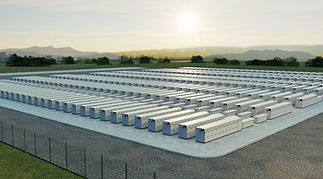
Kiewa Valley $453M Battery Approved
The Victorian Government has approved a $453 million Battery Energy Storage System (BESS) in the Kiewa Valley, developed by Chinese company Trina Solar. The 500 MW/1,000 MWh facility, located near Dederang, is designed to store renewable energy and release it during peak demand, powering up to 172,000 homes annually. The project was fast-tracked under the state's Development Facilitation Program to expedite clean energy projects.
What are the impacts
-
Grid stability: Stores excess renewable energy and releases it during peak demand, helping to stabilise the grid.
-
Reduced reliance on fossil fuels: By providing firmed renewable supply during high-demand periods, it can reduce the need for gas or coal generation.
-
Price moderation: Helps mitigate wholesale electricity price spikes during peak periods.
-
Business benefits: Offers more predictable energy costs and reduces exposure to peak demand charges.
-
Long-term renewable support: Strengthens Victoria’s transition to a cleaner, more reliable energy system.