


TTEG Editorial
The Energy Market Is Changing – What Does It Mean for Customers?
September highlighted a number of changes across the East Coast energy market that large energy users should keep an eye on.
Electricity is becoming more about when you use it.
Wholesale electricity prices remain influenced by strong renewable generation and increasing battery storage. However, the market is becoming more focused on the time of day electricity is used, particularly around morning and evening peaks.
New peak electricity market products introduced in September are another sign that the industry is increasingly looking at peak periods separately from the overall wholesale price.
For large-market customers, this means procurement is becoming more than simply finding the lowest $/MWh rate.
Instead of simply asking “What is the best electricity price?”, the relevant questions increasingly become:
When does the customer use electricity? How flexible is that load? What network tariff applies? What is the retailer pricing into the contract? And what risks are being transferred to the customer?
What should customers be doing?
✓ Review electricity & gas contract early
✓ Understand how your load profile affects pricing
✓ Review network tariffs & peak demand exposure
✓ Look beyond the headline retailer rate & understand what risks & costs are included
Good procurement is no longer just about finding the cheapest price — it is about understanding how the price is built and how it fits the way your business actually uses energy.
TTEG can independently review your current energy position and help you understand your pricing, costs and contract options.
National energy market
The electricity market is entering spring with a very different balance between generation, storage and demand than we have seen in previous years.
Renewable generation and battery storage are continuing to reshape the NEM, helping to reduce wholesale price pressure while changing when electricity is most valuable throughout the day. In Q2 2026, renewables supplied 42.1% of NEM generation, while average wholesale prices were 47% lower than the same quarter in 2025.
The latest market data shows that this trend continued into September, with renewable generation and battery storage continuing to influence wholesale market conditions. Strong solar generation contributed to lower daytime prices, while battery participation increased as the market shifted towards evening demand.
However, more recent changes in generation availability have introduced greater volatility into the market. From 1 October, changes to Eraring's generation bids effectively reduced the output being offered into the market by around 50%. This was followed by an outage at Bayswater, adding further pressure to available supply and contributing to recent increases in wholesale prices.
Key areas to watch this month include:
With winter demand easing and spring now underway, the electricity market is entering a different seasonal pattern.
-
Spring demand patterns: Lower heating requirements can reduce electricity demand, while changing operating conditions may shift when businesses use the most energy.
-
Increasing solar generation: Longer daylight hours and stronger solar output can place downward pressure on daytime wholesale prices.
-
Evening pricing: As solar generation falls later in the day, battery storage is increasingly being used to meet evening demand and manage price volatility.
-
New network tariffs: The 2026–27 tariff structures introduced in July are now reflected in business electricity costs, making tariff suitability worth reviewing.
-
Contract timing: Businesses with contracts expiring over the coming months should be assessing forward pricing and procurement options rather than waiting until their renewal date approaches.
September therefore provides a useful opportunity to step back and review how your business is positioned for the remainder of 2026 and into 2027.
Wholesale Market Conditions
Wholesale electricity prices have continued to ease compared with the elevated conditions seen in recent years.
The AER's latest market performance report found that wholesale prices fell across all NEM regions in 2025, supported by increased wind and solar generation, growing battery capacity and fewer extreme price events. Installed battery capacity increased from 2.2 GW to 6.1 GW during the year.
The improvement has continued into 2026. During Q2, average quarterly wholesale prices ranged from $60/MWh in Victoria to $95/MWh in South Australia, with prices considerably lower than the same period in 2025 across all regions.
However, lower average prices do not mean volatility has disappeared.
The AER continues to identify higher prices during evening and overnight periods, when solar generation falls and the market relies more heavily on flexible and dispatchable supply.
This increasingly makes the timing of electricity demand an important consideration for businesses.
Futures Market Movement
Forward electricity pricing continues to show relatively favourable conditions as we move through September, although the outlook varies between regions and future delivery periods.
The latest futures market data indicates that near-term pricing remains relatively soft, particularly compared with the higher prices seen during periods of market volatility in recent years. At the same time, pricing further into 2027 remains higher in some contracts, reflecting greater uncertainty around future supply, demand and market conditions.
With spring now underway, increasing renewable generation and changing seasonal demand are also influencing expectations for the months ahead.
Network Tariffs
The 2026–27 network tariffs have now been in effect for almost three months, with the impact beginning to flow through business electricity bills.
Changes vary across states and distributors. In the NEM, network costs are mostly increasing, driven by factors including higher transmission costs, inflation, regulatory revenue adjustments and, in NSW, costs associated with the NSW Roadmap. Victoria is more mixed, with network costs increasing for CitiPower, Powercor and United Energy customers, while decreasing for AusNet Services and Jemena customers.
Read the news item below for more information on the 2026–27 network tariff changes and what they mean for businesses.
Supply Outlook
Australia's electricity supply mix continues to evolve, with renewable generation, battery storage and transmission infrastructure playing an increasingly important role.
The latest AEMO Electricity Statement of Opportunities (ESOO), released in August, indicates that the outlook for reliability has strengthened, supported by new renewable generation, batteries, transmission investment and continued growth in rooftop solar and household battery storage. AEMO reported that a record 9.1 GW of new generation and storage capacity reached full output during 2025–26, more than double the previous year.
September data is also highlighting the growing role of battery storage in the NEM. Grid-scale battery participation continued to increase through September, with battery market activity up compared with August. This reflects the changing role of batteries in absorbing and shifting energy across the day, particularly as renewable generation increases.
What This Means for Businesses
September provides a timely opportunity to assess your current energy position before the final quarter and ahead of further market changes.
While wholesale prices remain lower than this time last year, recent changes in generation availability have increased volatility and pushed prices higher in the short term. With the 2026–27 network tariffs now in effect, businesses should also be reviewing whether their current tariff structure and contract arrangements remain suitable.
Rather than waiting until a renewal is due, reviewing your electricity pricing, tariff structure and overall usage profile in advance can provide greater visibility and allow more time to consider procurement options as market conditions change.
If your energy contract is approaching renewal, or you would like to better understand your current position, contact TTEG for a complimentary bill check.

ELECTRICITY FUTURE PRICING CHARTS


What 1 July Tariffs Mean by State
The impact of the 1 July 2026 network tariff changes is now becoming clearer, with the effect varying between states, distributors and tariff structures.
In Victoria, network costs have increased for CitiPower, Powercor and United Energy customers, while costs have decreased for AusNet Services and Jemena customers. The AER identifies higher transmission costs and inflation as key drivers of the changes.
In New South Wales, network costs have also increased overall. Higher NSW Roadmap and transmission costs are contributing to the change, although increased forecast electricity consumption is partly offsetting the impact for Ausgrid and Endeavour Energy customers. The recovery of previously under- or over-recovered revenue is also affecting individual networks differently.
In Queensland, higher transmission costs, approved cost pass-throughs associated with extreme weather events and the recovery of previously under-recovered revenue are contributing to higher network costs.
In South Australia, new transmission costs are beginning to flow through, including costs associated with the Firm Energy Reliability Mechanism and the new transmission loop connecting South Australia, Victoria and NSW. The AER also notes that lower forecast electricity consumption is contributing to higher per-customer network costs.
Western Australia operates under a separate regulatory framework, with Western Power's 2026–27 network price list approved by the Economic Regulation Authority from 1 July 2026. The updated prices apply to network access charges passed through to retailers and ultimately reflected in customer electricity costs.
With these changes now flowing through bills, September is a useful point for businesses to look beyond the headline electricity rate and review the network charges appearing on their invoices. The AER's 2026–27 analysis shows that the network component of regulated flat-rate electricity prices has increased by between 0.2% and 10.6%, depending on the state, distributor and customer type.
For businesses with significant demand, changing operating hours or different consumption patterns, the impact can be more pronounced depending on the tariff that applies to the site. Reviewing the first bills under the new tariff year can help identify whether network charges and tariff structures continue to reflect how the business actually uses electricity.
AEMO Releases 2026 Electricity Reliability Outlook
On 25 August 2026, the Australian Energy Market Operator (AEMO) released its 2026 Electricity Statement of Opportunities (ESOO), providing a 10-year outlook for electricity supply, demand and reliability across the National Electricity Market. AEMO reports that the reliability outlook has strengthened as new renewable generation, batteries and other storage projects continue to enter the market. At the same time, electricity demand is expected to increase as electrification continues and new large energy users connect to the grid.
The report highlights the importance of delivering new generation, storage and transmission projects as Australia's electricity system changes and ageing coal generation retires. AEMO's outlook indicates that the timing of these projects will be important to maintaining reliability as demand grows.
With the new pricing year now underway, the AER’s latest determination provides a useful benchmark for businesses reviewing their current electricity arrangements and considering upcoming contract renewals.
What it means for businesses
For businesses, the report provides useful context for longer-term energy planning. While the near-term supply outlook remains relatively strong, changes in demand and the retirement of existing generation will continue to influence wholesale market conditions and the availability of electricity in the years ahead.

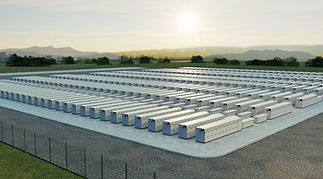
Batteries Continue to Reshape the Evening Electricity Market
Analysis published on 15 September 2026 shows the growing role of battery storage in meeting Australia's evening electricity demand. Gas generation during the 5pm–8pm evening peak fell by 67% in the year to August 2026, while batteries supplied around 49% of the grid's dispatchable electricity needs during those hours, compared with just 0.4% in 2020.
The change reflects the rapid growth of both large-scale and household battery storage. Batteries can absorb electricity when renewable generation is high, particularly during the middle of the day when solar output is strong, and then discharge that stored energy during the evening when demand increases and solar generation falls.
This is contributing to a significant change in the way the NEM operates. Gas generation is being used less frequently to meet the evening peak, while batteries are increasingly providing the flexibility needed to shift renewable electricity into higher-demand periods. For businesses, the changing generation mix is relevant to the broader wholesale market outlook and the way electricity prices may behave across different times of the day.
SRES Expands Solar Eligibility
The Clean Energy Regulator confirmed that legislation has been amended to expand the Small-scale Renewable Energy Scheme (SRES) to eligible solar systems from 100 kW up to 1 MW. The change takes effect from 1 October 2026, meaning eligible commercial and industrial solar projects in this size range will be able to access Small-scale Technology Certificates (STCs), subject to the scheme's other eligibility requirements.
The change is significant for businesses considering larger rooftop solar projects. Previously, systems above 100 kW generally could not access the SRES, so the expansion provides an additional financial incentive for eligible projects between 100 kW and 1 MW. Businesses with suitable roof space and significant daytime electricity consumption may now want to reassess the potential costs and benefits of a larger solar installation.
With the new eligibility taking effect from 1 October, businesses currently considering solar should also consider the timing of their project and whether their proposed system meets the SRES requirements.


Gas market update
Gas Market Eases, Risks Remain
Victoria's gas market is currently in a more comfortable position than it was during the supply concerns experienced between 2022 and 2025. Lower gas demand, increased storage and improved pipeline capacity are helping support supply across the southern states.
However, the market is changing. Victorian gas production is expected to decline significantly over the coming years, particularly as production from the Gippsland Basin continues to fall. AEMO forecasts Victorian indigenous gas production to decrease from around 242 PJ in 2026 to 114 PJ by 2030, a reduction of approximately 53%.
At the same time, international LNG prices have increased. The ACCC's September update shows LNG netback prices rising from $20.47/GJ in August to $25.74/GJ in September, with October prices reaching around $30.24/GJ. This highlights how international LNG markets can continue to influence Australia's east coast gas prices, even when domestic supply remains relatively comfortable.
What Does This Mean for Businesses?
For large Victorian gas users, the immediate outlook is relatively comfortable, but the medium-term risk is becoming more difficult to ignore.
A number of factors will influence gas pricing over the next few years:
-
Declining Victorian production will increase reliance on gas from interstate markets and storage.
-
Lower gas demand is currently helping offset some of the decline in local production.
-
Iona storage and pipeline infrastructure are becoming increasingly important to maintaining supply during periods of high demand.
-
Gas-fired electricity generation could create additional demand during periods of low renewable generation or electricity system stress.
-
International LNG prices and global events can create additional volatility in east coast gas markets.
This means today's relatively comfortable supply position does not necessarily provide an indication of where prices could be over the full term of your next contract.
Looking Ahead
2026–27 | Relatively comfortable
Current domestic supply conditions provide a more favourable environment for businesses approaching a gas renewal. However, international LNG prices remain an important consideration.
2027–28 | Increasing sensitivity
As local production continues to decline, winter demand, storage levels and interstate pipeline flows will become increasingly important to pricing.
2028–30 | Greater market risk
Further declines in Victorian production, combined with the changing electricity generation mix, could increase the potential for periods of higher gas demand and price volatility.
What does this mean for businesses?
The east coast gas market is in a more comfortable short-term position than it was several years ago, but the longer-term outlook is becoming increasingly complex.
For large Victorian gas users, the key is to understand how market conditions, contract timing, usage and future supply risks could affect the cost of gas over the life of your next agreement.
If your gas contract is due for renewal, TTEG can review your current pricing, usage and contract arrangements to help identify potential opportunities before you commit to your next agreement.